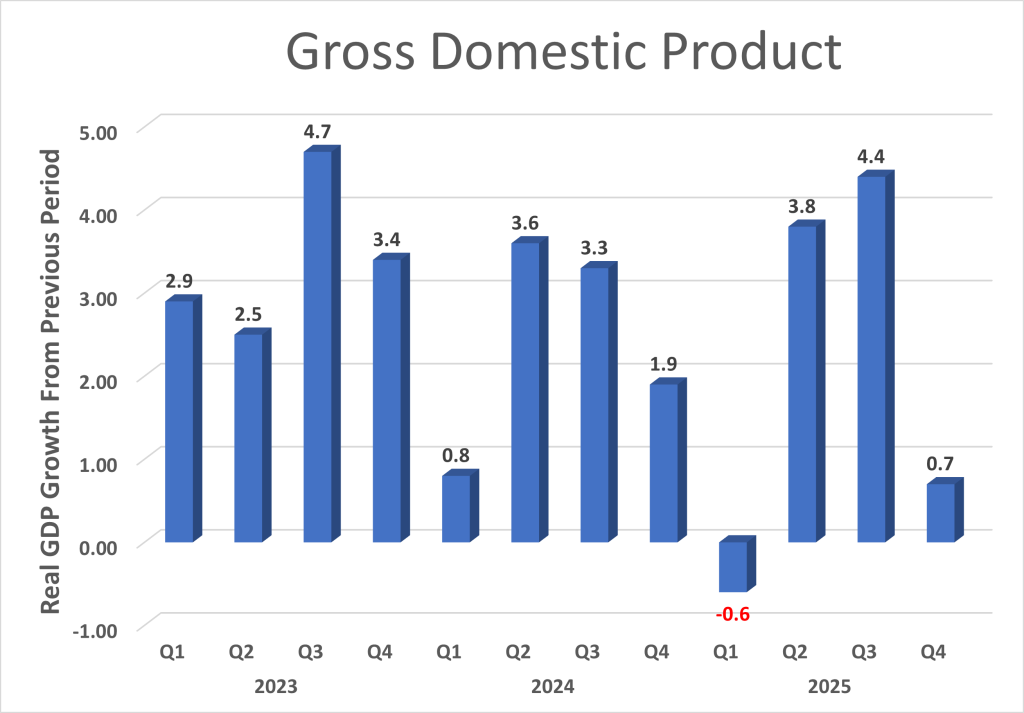
Just released: Growth of U.S. economy plummets. Yesterday’s release of .7% economic growth in the 4th quarter of 2025 was the 2nd worst quarterly growth in the last 3 years, as shown in the chart. This 4th quarter growth rate combined with the 1st quarter growth rate makes 2025 the only year in the last 13 years (except for Covid) that the U.S. experienced two quarters of economic growth this low.
This article examines how poor economic growth affects the commercial real estate industry and details not only how the retail, office, industrial and hotel industries are affected but what they need to do today to protect themselves in periods of poor economic growth. Then we drill down into how the economy’s growth rate is calculated and the surprising answer to who is responsible for the decline in 4th quarter growth. Let’s get started.
Business owners are always pushing for growth and spending every waking minute creating new ideas to provide a better product that increases sales. The thirst for growth is at the heart of our free market system, but this latest showing of a slower growing economy reminds us that business owners need to be smart about their long term plans. This latest growth rate number means retail, office, industrial and hotel businesses should plan for a decline so first let's cover strategies to survive in a slow economy.
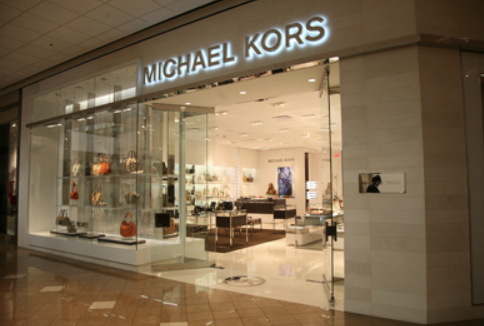
Retailers need to reduce inventory and plan how to keep inventory low during the next 6 months. Reduce operating costs by reducing hours, staff, payroll and renegotiate vendor contracts. Rather than spend on marketing to get new customers, reinforce value to existing customers. Many retail consumers first shop online then visit a store, so update your online presence and match offerings with actual inventory. Be stingy about dropping prices and focus on technology to make the most of your customer data to create a better shopping experience.

Businesses heavy with office space still have to pay the same office rent whether employees work part time from home or full time at the office. While office rent leases can be long term, 5 to 10 years, everything is negotiable. Office tenants can renegotiate a lease for a smaller square foot space while giving the landlord a longer term. Landlords love long term leases. Underutilized office space can be subleased to provide income. If your business has multiple locations, offices can be combined and the lease with the nearest expiration period can be terminated.

The warehouse sector is the hardest hit during a slowdown. With imports and exports declining, the demand for warehouse space plummets. Warehouse tenants can use a slowdown to prospect for new suppliers and use technology to track inventory and provide just in time delivery to provide a higher level of service. Warehouse tenants can review their floor plan for ways to reduce costs and increase profit margin. While warehouse tenants are pinched, landlords have big problems such as tenant defaults and deferred maintenance.
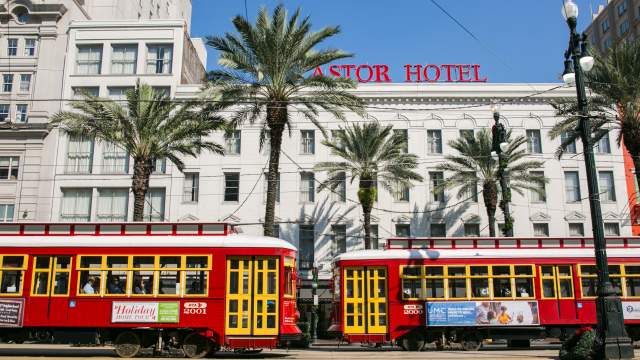
Hotel owners have more tools than most that allow them to stay alive in a slowdown so they can prosper in better times. Of course hotel owners can cut back on staff, but even better, they can cross-train employees to work more efficiently. Instead of cutting rates, hotel owners can bundle services such as internet, dining, spa and parking. One industry standard is to charge a hefty amenity fee. Attracting loyal guests to book directly and utilizing email marketing tied to a creative website can drive sales.
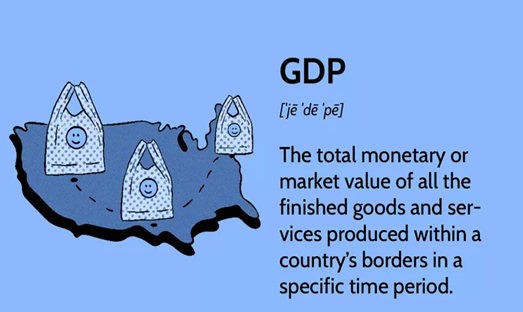
GDP is the Gross Domestic Product, which is the value of all goods and services produced only in the United States. GDP data is collected and produced by the U.S. Bureau of Economic Analysis which is under the Department of Commerce that was established in 1913.
GDP is a formula that is calculated by combining 5 sectors, including: spending by U.S. residents, business spending on equipment and inventory, government spending (federal, state and local) plus exports. Imports are subtracted from GDP. Here is the formula:

Not all of the 5 sectors of GDP rise or fall at the same time. In the 4th quarter of 2025, consumer spending increased 2% and investment increased 3.3%, but exports declined 3.3% and imports declined 2.5%.
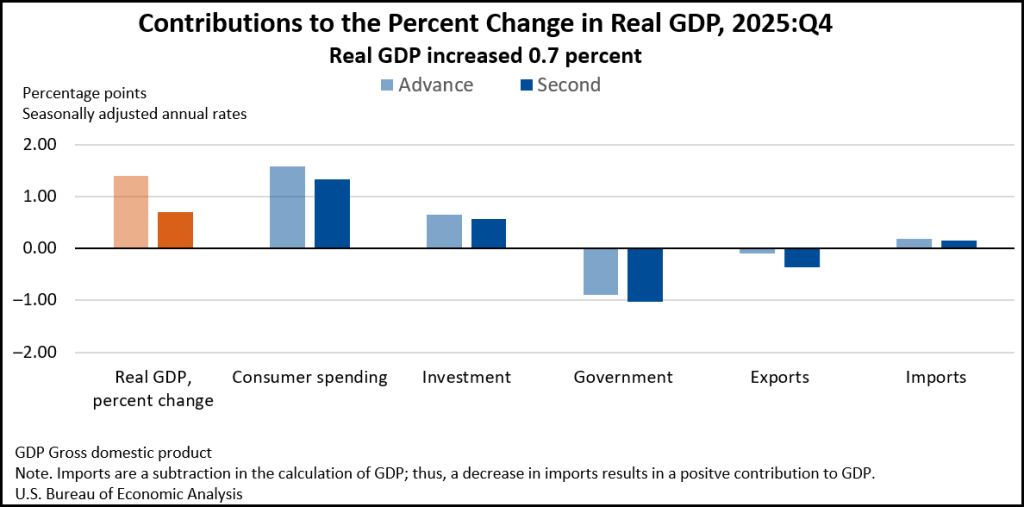
The biggest drag on the economy was government spending which declined 5.8%, as shown in the chart. But the government sector includes federal, state and local spending and the entire decline in the government sector was due to a 16.7% decline in federal spending which offset the 1.2% increase in state and local government spending. If only the future provided a good war to bring back federal defense spending to boost the economy.

The GDP percent number you read about in the news this week is the rate of change from the previous quarter and is measured 3 times, as shown in the table. Make sure you know which estimate is the latest:

Also, GDP can be reported two ways: one called Real GDP which is after inflation is factored out and, two, Current Dollar GDP which is the actual dollar amount.
The one concept I remember from MBA school was that retrenchment is not an acceptance of failure, but is a viable strategy in a slow growth economy. This latest growth rate number means retail, office, industrial and hotel businesses should plan for a decline and utilize these strategies to protect themselves in a slow economy so they can thrive when the economy grows again.
For more information on Commercial Real Estate, select from over 150 articles in the Louisiana Commercial Real Estate Blog. Louisiana Commercial Realty is managed by commercial broker Robert Hand in New Orleans, who has successfully represented tenants and landlords in hotel, retail, warehouse and office transactions. Robert is the only broker in the state to create and teach a workshop showing residential agents how to be successful in the commercial sector which was approved for continuing education credits by both the Louisiana and Mississippi Real Estate Commission. Robert also has authored more commercial real estate articles in national publications that any broker in the state. During the Covid years, Robert worked for the Small Business Administration teaching new businesses how to get started and grow successfully.
